Minimalist interiors have become a defining trend in modern homes, celebrated for their clean lines, uncluttered layouts, and timeless appeal. By focusing on simplicity and purposeful design, they create spaces that feel calm and easy to live in. However, minimalism is often mistaken for doing less. When walls, materials, and finishes all look the same, a room can feel flat rather than thoughtfully layered.
That’s where textured wall panels make a difference. They add depth, warmth, and visual interest without disrupting the clean aesthetic. Instead of relying on bold colours or excessive décor, texture brings walls to life through subtle patterns, materials, and the way they interact with light, making modern interiors feel richer and more inviting.
Why Texture Matters More Than You Think
Colour sets the mood of the room, but texture changes how you experience it. A simple painted wall can’t match a wall with panels, because the latter will change with the light of the day. Light interacts with the panels, creating high and low points. This gives the room a sense of depth that flat surfaces simply cannot achieve.
Another advantage is that textured panels reduce the need for excessive decoration. A well-designed feature wall often speaks for itself, making the rest of the room appear clean, uncluttered, and visually balanced.
Popular Textured Wall Panel Styles
1. Fluted panels
These are probably the safest bet if you’re not sure where to start. The vertical grooves draw the eye upward, which has the nice side effect of making ceilings feel taller than they are. They tend to work particularly well behind a TV unit, behind a bed, or in an entrance foyer.
2. Wooden slat panels
These bring warmth in a way fluted panels usually don’t. They’re well suited to living rooms, home offices, and reading nooks, where a softer, more inviting atmosphere is desired. Their natural finish blends effortlessly with modern interiors, adding character without overwhelming the overall design.
3. Stone or concrete-effect panels
These panels give you an architectural, almost raw look. They’re especially good in open-plan homes, where one strong wall can do the job of visually separating the living area from the dining space without an actual wall being built.
4. Fabric or acoustic panels
These panels remain a practical choice. They look good, but they also absorb sound, which matters more than people expect in bedrooms or a home office where you’re on calls all day.
Matching the Texture to the Room
Not every panel suits every space, and this is where a lot of homeowners get it wrong.
In a living room, fluted or wooden panels usually create the focal point you want without overpowering the seating around it.
Bedrooms tend to call for something softer; upholstered or fabric panels behind the bed give the room warmth without making it feel busy.
Dining areas do well with stone-inspired finishes, which add character but stay out of the way of the actual dining experience. And in a home office, acoustic panels are worth considering less for how they look and more for what they do to the room’s sound.
Lighting Makes or Breaks a Textured Wall
Here’s something people often miss: texture and lighting need to be planned together, not as an afterthought.
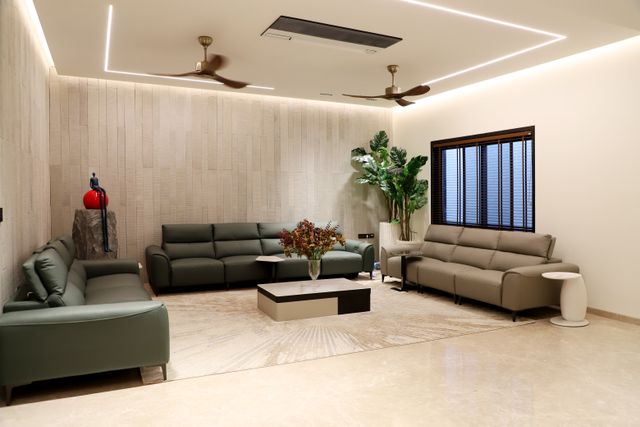
Modern architectural lighting includes wall washers, recessed spotlights, hidden LED strips, soft cove lighting, which can bring out the depth in a textured surface that direct overhead light simply won’t.
Warm lighting tends to flatter timber, while something more neutral usually does more for concrete or stone finishes.
And rather than lighting every wall the same way, it’s often better to let one or two walls carry more light than the rest, so the eye has somewhere to land.
A Few Things Designers Keep in Mind
The best interiors use texture with restraint rather than abundance.
- Instead of covering every wall, choose one feature wall that naturally draws attention, such as behind the sofa, bed, or television. This creates impact without making the room feel visually busy.
- Create a contrast between textured elements and smooth surfaces around the area. This will enable you to highlight both elements while ensuring that they complement each other in the process.
- Scaling is also important. Big geometric patterns will appear too much for small apartments, whereas fine textures will be suitable for small spaces because they add detail but do not overload the space.
Last thing worth doing: don’t let the panel sit on its own. Pick up the same material or tone somewhere else in the room: a shelf, a piece of furniture, so the wall feels like part of the design rather than something bolted on afterwards.
Why the Same Wall Panel Looks Different in Every City
Take that same idea into a Mumbai home, where every square foot is negotiated, and it looks different. Homeowners lean towards lighter timber and slimmer fluted panels, just enough texture to give the wall some character. How much space a home has to spare usually decides what a trend ends up looking like once it’s actually on the wall.
Modern apartments in Bengaluru are often designed to feel bright, open and uncluttered. They bring in warmth without disturbing that minimalist feel homeowners are often going for. This shows up a lot in pockets like HSR Layout, where the brief tends to be some version of sophisticated, but liveable.
Homeowners exploring interior designers in HSR Layoutare often looking for homes that feel cohesive rather than overly styled. Texture is frequently used to anchor a room, adding warmth and visual depth while preserving the openness that defines many contemporary apartments.
Texture Only Works When It’s Part of a Bigger Story
A common mistake is treating a textured wall panel as a decorative add-on, something that’s chosen once everything else is in place. The most successful interiors work the other way around, where texture is considered alongside the layout, lighting and furniture from the outset.
At Bonito Designs, every home begins with the people who live there. Understanding daily routines, personal preferences and how each space will be used shapes every design decision that follows. Materials, textures, colours and finishes are selected together, allowing each room to feel connected rather than assembled piece by piece. It’s this thoughtful, end-to-end approach that has made Bonito one of thetop interior designers in Bangalorefor homeowners looking for complete homes rather than standalone design updates.
Conclusion
A textured wall panel does more than fill space. It changes the mood of a room; timber brings warmth, a fluted panel adds a bit of rhythm and precision, a stone-inspired finish gives a wall real weight. None of that shows up in a photo the way it does when you’re actually standing in the room. Get the texture right, and it stops being a finishing touch. It becomes one of the things holding the whole design together.
Photo by Sharath G. from Pexels (Free for commercial use)
Image Published on April 22nd, 2025